Five Photos That Uncover the Meaning of Democracy

Editor’s Note: The United Nations International Democracy Day (Sept. 15, 2015) is observed every year as a reminder of the universality of democratic values.

To celebrate this year’s Democracy Day, we asked NDI staff, who support democracy worldwide, to share a photograph that best represents the answer to the question: “What does democracy mean to you?” NDI staff are from more than 60 countries, spanning five continents. Over 100 thought-provoking images were submitted by photographers from all around the world, but the following five stood out.

Click here to share via Twitter your answer the question: “What does democracy means to you?” Use hashtag #DemocracyIs.

1. Resilience (Tweet this)
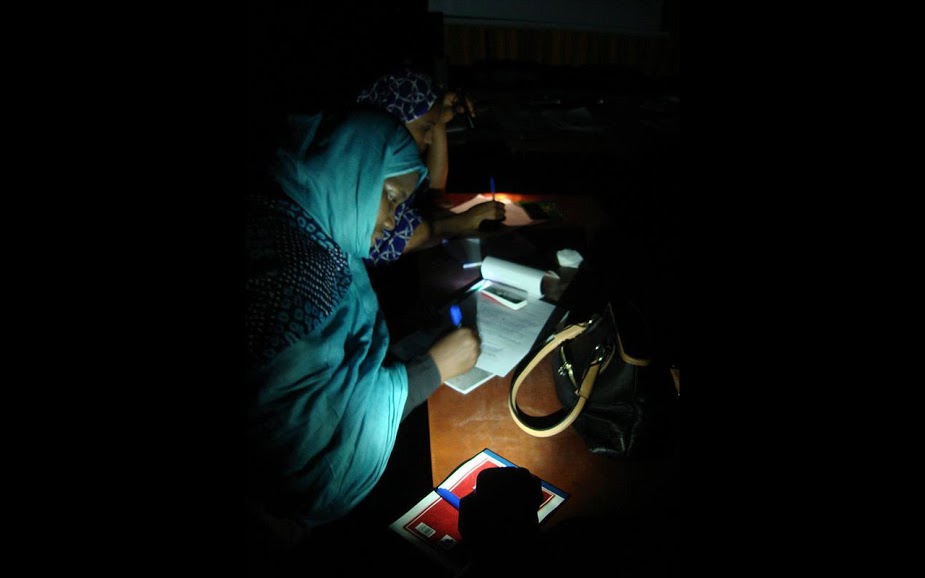
Despite the power being cut, the national campaign for education and awareness of citizen involvement sessions continued. With only the light from cell phones and flashlights the trainings continued, despite the surrounding darkness: democracy means resilience. Marie-Ève Bilodeau, NDI’s resident director in Tunisia, took this photo while in Nouadhibou, Mauritania.

The power was cut, but despite the surrounding darkness a national campaign for education and awareness of citizen involvement training session in Mauritania continued with only the light from cell phones and flashlights. Democracy means resilience. Marie-Ève Bilodeau, NDI’s resident director in Tunisia, took this photo while in Nouadhibou, Mauritania.

2. The freedom to participate (Tweet this)
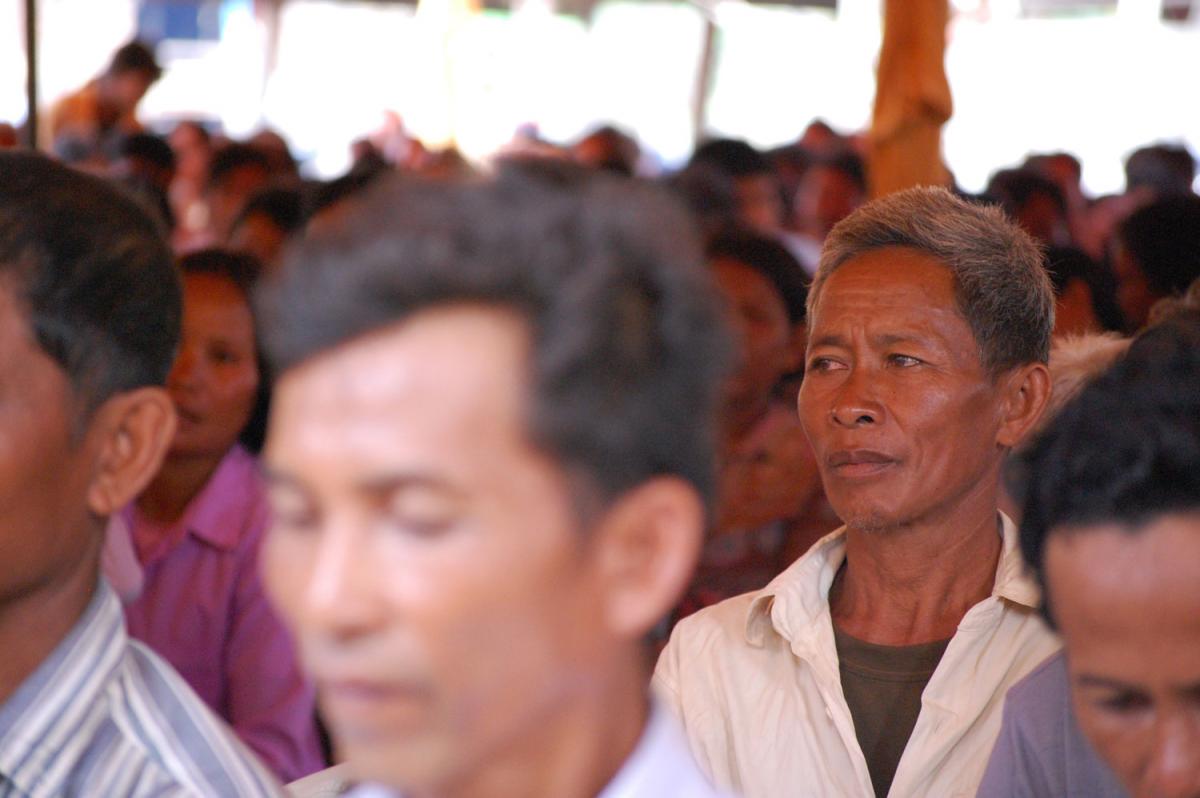
The intense focus on this individual, captured by Tassos Coulaloglou, senior program officer for NDI’s governance team, at a constituency dialogue in Srey Snam, Cambodia, shows us that democracy means the opportunity to participate. In the faintly blurred crowd, the faces of men, women and children are all represented. These events have allowed thousands of Cambodians to ask questions and voice concerns, as well as learn about their representatives’ responsibilities to constituents.

The intense focus on this individual, captured by Tassos Coulaloglou, senior program officer for NDI’s governance team, at a constituency dialogue in Srey Snam, Cambodia, shows us that democracy means the opportunity to participate. In the faintly blurred crowd, the faces of men, women and children are all represented. These events have allowed thousands of Cambodians to ask questions and voice concerns, as well as learn about their representatives’ responsibilities to constituents.

3. Education for all (Tweet this)
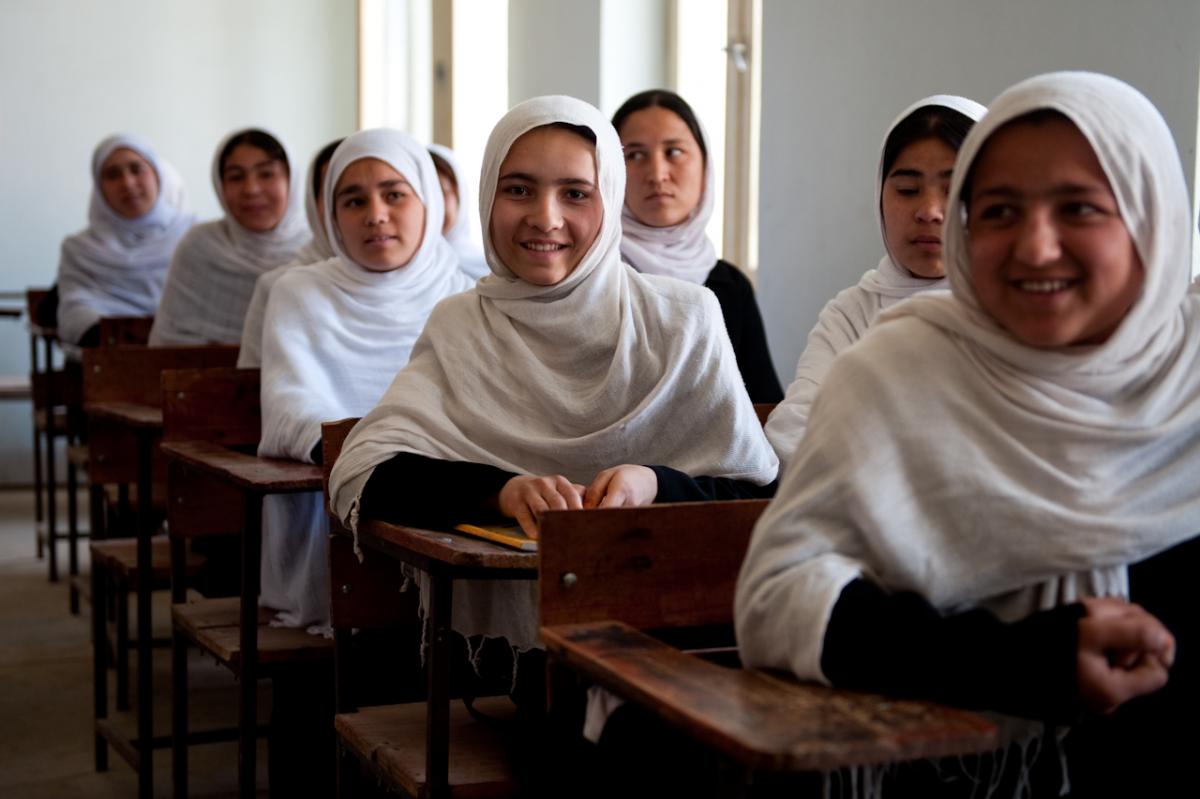
In Afghanistan, literacy and primary school completion rates for young women are far below that of their male counterparts. This photo submitted by Muhammad Akbar Qati, regional manager for Northern Afghanistan inspires hope that the gap could be shrinking. During a class and with smiles on their faces, these Afghan girls freely discuss the concept of democracy. Democracy means education for all.

In Afghanistan, literacy and primary school completion rates for young women are far below that of their male counterparts. This photo submitted by Muhammad Akbar Qati, regional manager for Northern Afghanistan inspires hope that the gap could be shrinking. During a class and with smiles on their faces, these Afghan girls freely discuss the concept of democracy. Democracy means education for all.

4. Security and equal representation (Tweet this)
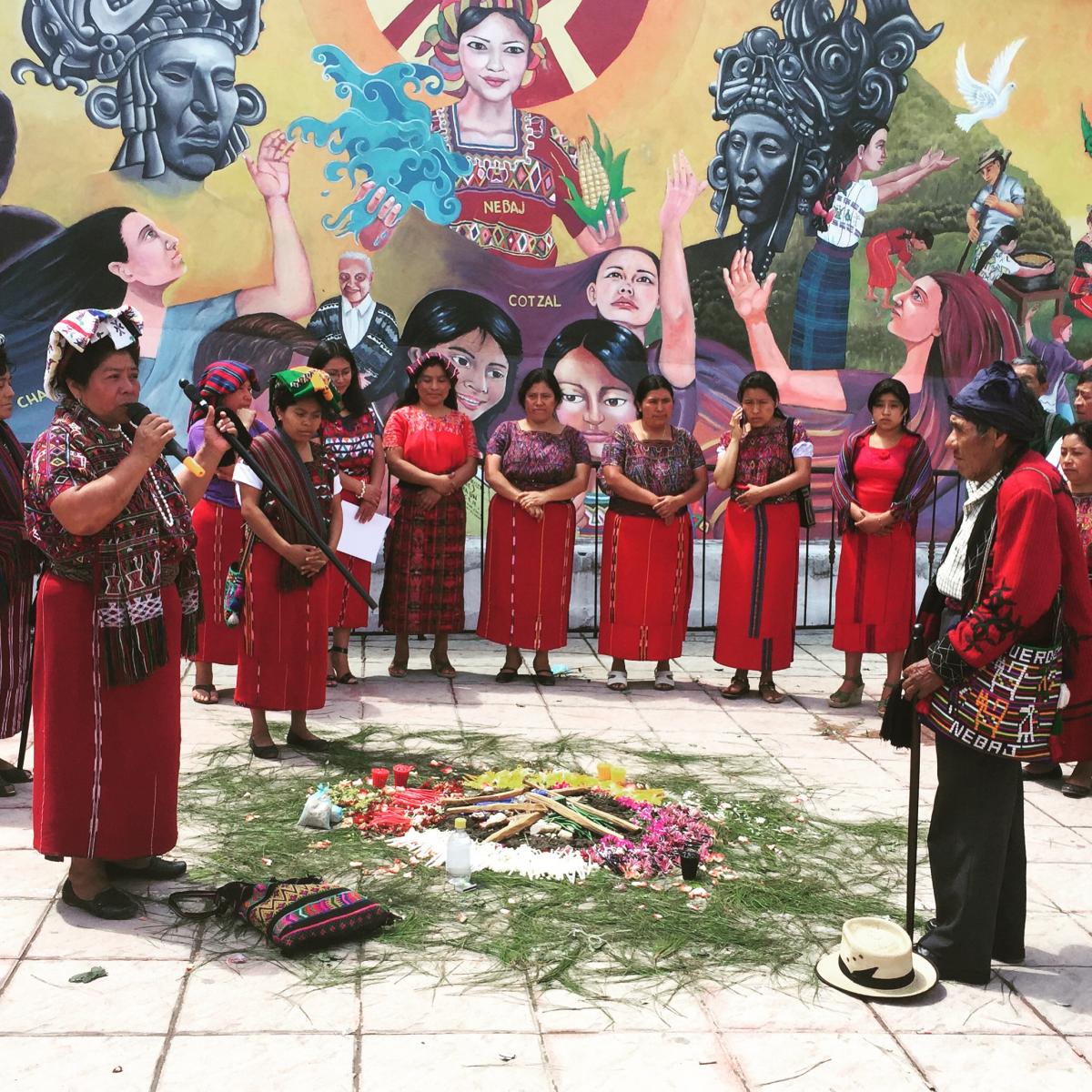
A traditional Mayan ceremony in Nebaj, Quiche, Guatemala, celebrates the launch of the “More Inclusion, Less Violence, ” election observation effort to reduce election violence and illegal campaign activity leading up to the September 6 presidential election. The photo, taken by Sara Barker the resident program manager in Guatemala, shows us that democracy means security and equal representation for marginalized groups.

A traditional Mayan ceremony in Nebaj, Quiche, Guatemala, celebrates the launch of the “More Inclusion, Less Violence, ” election observation effort to reduce election violence and illegal campaign activity leading up to the September 6 presidential election. The photo, taken by Sara Barker the resident program manager in Guatemala, shows us that democracy means security and equal representation for marginalized groups.

5. The right to vote (Tweet this)
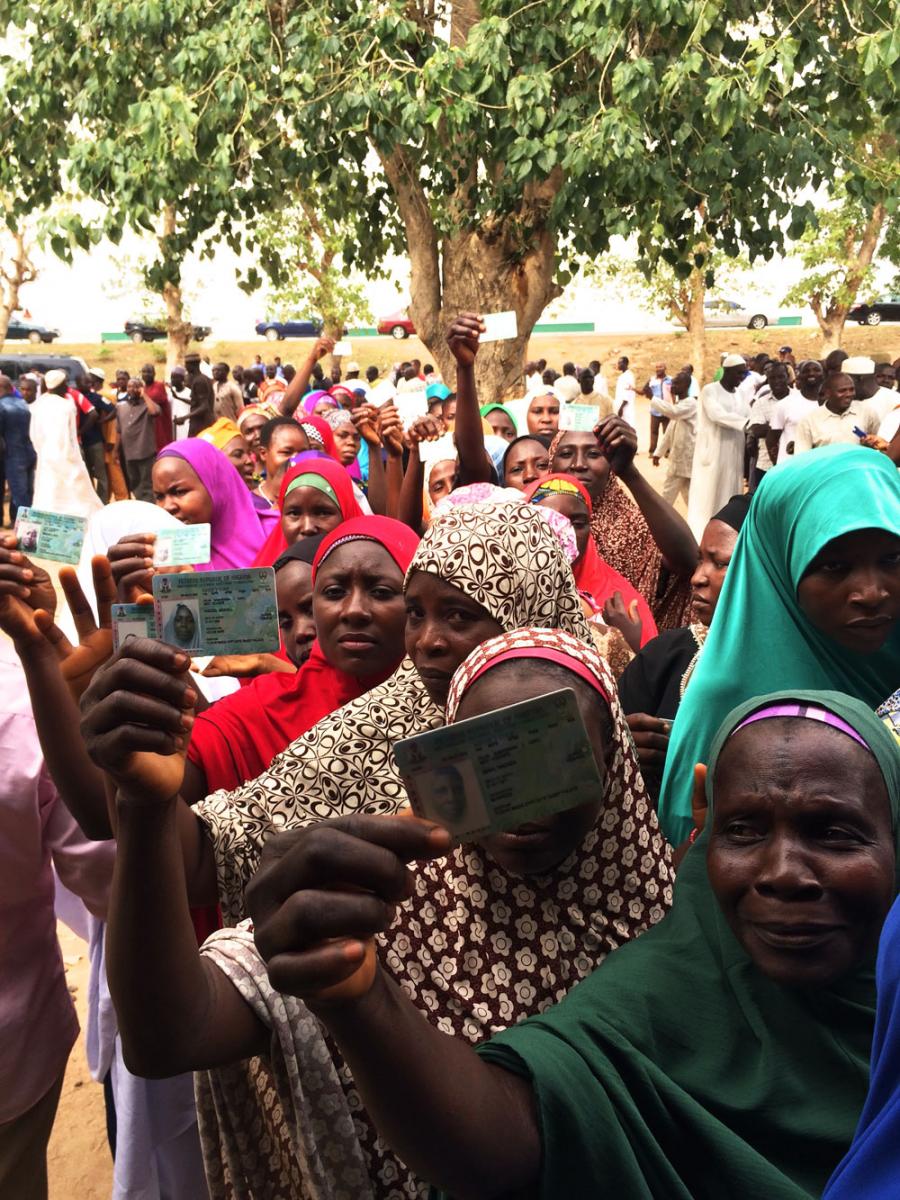
Women in Nasarawa state, Nigeria, line up to show their permanent voter’s cards, waiting to be accredited to vote in the March 2015 national elections. This photo, which was taken by Ryan Dalton, senior program assistant with NDI’s Central and West Africa team, shows that democracy means the right to vote. In a largely peaceful election, Muhammadu Buhari’s victory over incumbent President Goodluck Jonathan marked the country’s first democratic transition of power from one political party to another.

Women in Nasarawa state, Nigeria, line up to show their permanent voter’s cards, waiting to be accredited to vote in the March 2015 national elections. This photo, which was taken by Ryan Dalton, senior program assistant with NDI’s Central and West Africa team, shows that democracy means the right to vote. In a largely peaceful election, Muhammadu Buhari’s victory over incumbent President Goodluck Jonathan marked the country’s first democratic transition of power from one political party to another.

View the Blog in its original form here.

Published on September 15, 2015 

A Look Back at our International Democracy Day Tweettalk

In recognition of International Day of Democracy, NDI partnered with the International Republican Institute (IRI) and International Foundation for Electoral Systems (IFES) to host an online discussion, or TweetTalk.

#DemTalk

These three organizations constitute the principal partners in the Consortium for Elections and Political Process Strengthening (CEPPS), an organization that was founded in 1995 to pool the experience of the premier international organizations dedicated to democratic development.

Kenneth Wollack, president of NDI, Michael D. Svetlik, vice president for programs at IFES, and Tom Garrett, vice president for programs at IRI, answered eight democracy-related questions posed by @CEPPS and other TweetTalk participants. A summary of the TweetTalk is available on Storify.

Using the hashtag #DemTalk, respondents discussed both general shifts in democratic trends across the world and specific examples of programs that create “space for civil society” — the theme of this year’s Democracy Day.

In response to a question about recent democratic successes, Wollack pointed out that there are too many examples to fit into a 140 character tweet, but reminded us that “democratic progress is not linear.” Democratic milestones are not always set in stone and can be reached in different ways. Garrett noted the Nigeria’s first peaceful transition of power between political parties during the country’s March 2015 election. @NDIWomen mentioned the high percentage of female members of parliament in Rwanda and Bolivia. Tunisia, Ghana, Guyana, Ukraine, Indonesia, Nigeria and others were highlighted as countries that have recently experienced democratic growth.

The increasing number of countries that participate in Democracy Day also reflects the growing support for democracy. According to the UN, this year members of parliament in 162 countries promoted International Democracy Day through the Inter-Parliamentary Union. Only 46 countries promoted Democracy Day when it was first celebrated in 2008.

Responding to a question on civil society success stories, Hana Murr, senior program assistant with NDI’s Political Parties team, mentioned the #YouStink movement in Lebanon. After the city landfill in Beirut reached capacity in July, the government started unloading garbage on the coast. Citizens formed the #YouStink movement to protest this problem. Murr credited this movement for encouraging the government consider viable technical alternatives to the city’s trash crisis.

Austin Robles, program officer for Latin American and the Caribbean at NDI, highlighted “persistent, concerted civic pressure” from civil society in Guatemala that forced the resignation and arrest of corrupt officials in the lead up to the September 6 presidential election.

During this TweetTalk there were 531 tweets by 106 users with the potential to reach 216,329 unique users with over 1 million impressions. The majority of the 106 users were from the United States. However, users from Brazil, Uganda, Nigeria, Poland, Canada and India also joined the conversation. Questions and responses were tweeted in English, French and Spanish.

Read this blog in its original form with images here and view my Storify here.

Published on September 24, 2015